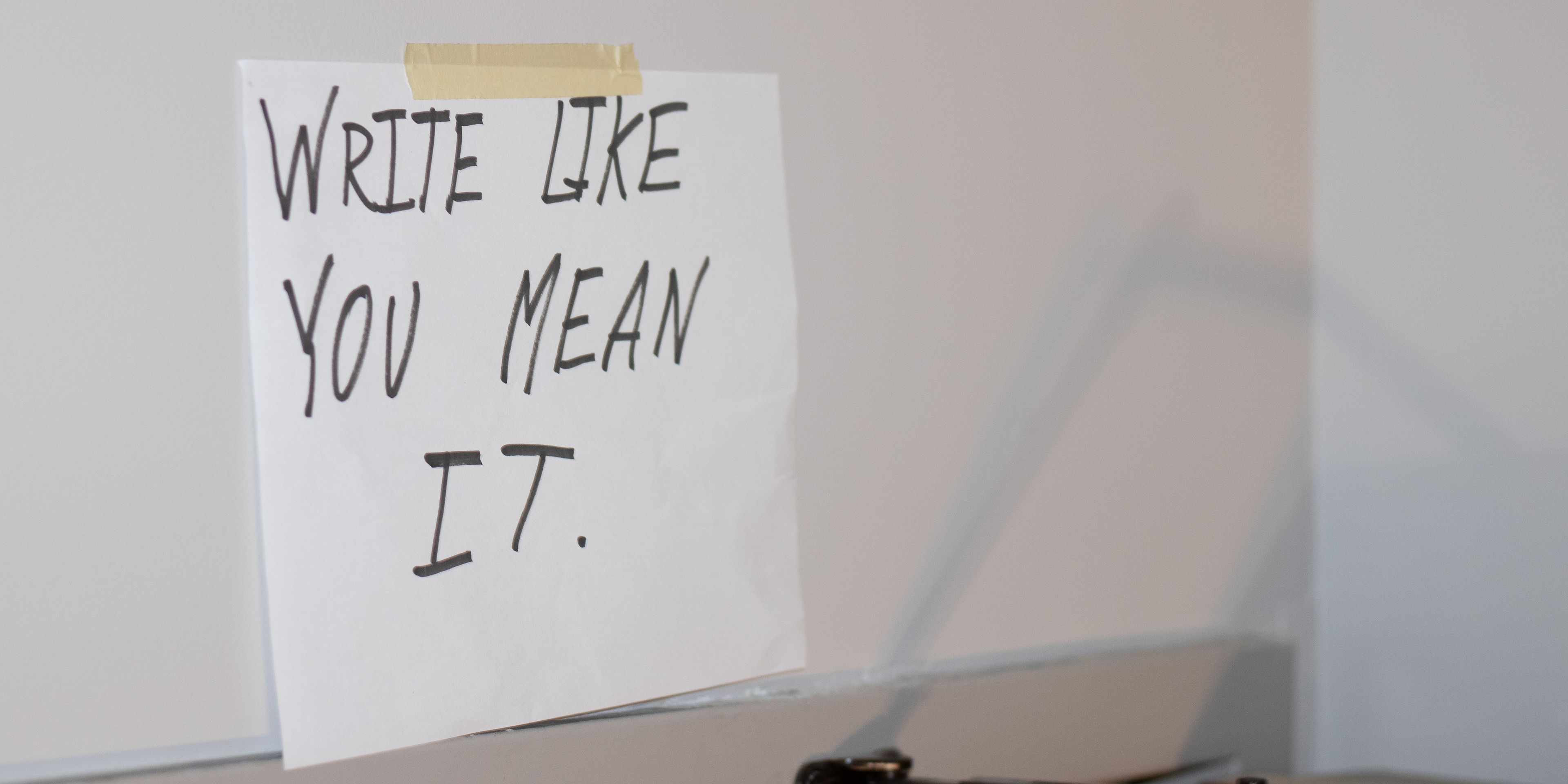
The "WRITE LIKE YOU MEAN IT." sign, hanging above the doorway of our newsroom, room 205B.
Brady Ehrhart: 
Write Like You Mean It.
In 2025, a Cinderella story was born out of a room the size of a closet, nestled in the 200’s hallway of a school in Memphis, Tenn., where I led a group of some of the grittiest and most intensely motivated young journalists I have ever had the privilege of collaborating with, from a widely unknown publication to the most renowned in the state. 
My name is Brady Ehrhart. This is that story. 

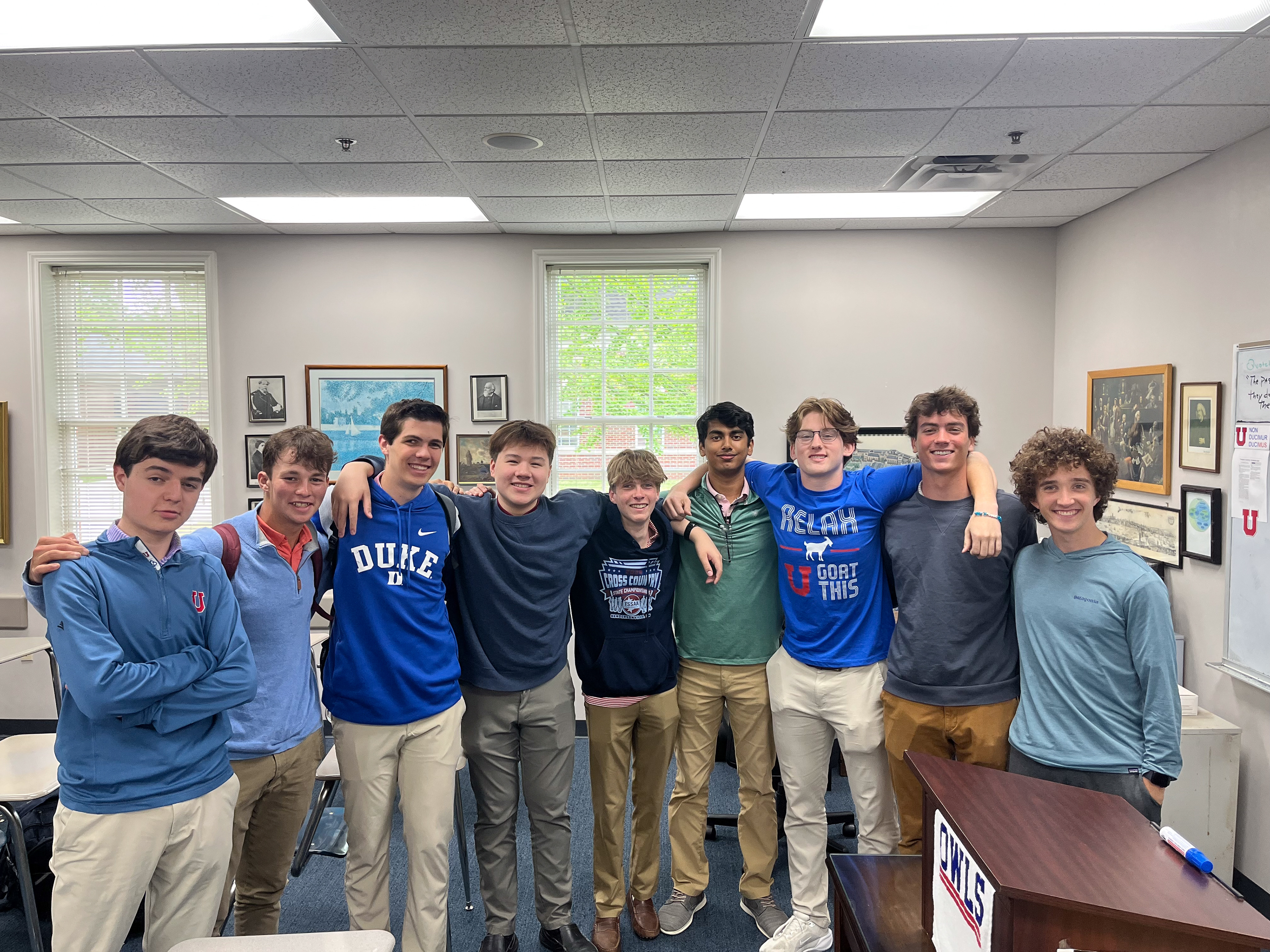
Members of my staff and I pose for a group photo on April 29, 2025, following my appointment as editor-in-chief. (Photo Courtesy of Amrik Chakravarty, MUS '25)
At the end of my junior year, I became the editor-in-chief of Memphis University School’s student newspaper, The Owl’s Hoot, and it has been the most impactful year of my adolescence. But my journey and love of words began much earlier, and out of necessity. 
I was born with a submucous cleft palate, a rare birth defect that afflicts ~.08% of children, which inhibited the formation of the muscles in my mouth while allowing for tissue to grow over it. At three-and-a-half, I underwent reconstructive surgery to repair it but was left with a debilitating speech impediment. Doctors questioned my ability to normally speak. 
Despite the odds, I made a full recovery, and through a nightly ritual of reading aloud to better my recovery, I found an intense love for writing and storytelling. I quickly learned that stories were more than a source of entertainment, allowing me to envision the lives of the characters.  
Entering high school, I immediately joined The Owl’s Hoot staff. Our paper was established in 1955 and has historically been a club program. Former editors have gone on to become published authors (Hampton Sides), CEOs (David Sachs), and media executives (Edward Felsenthal). However, since about 2010, our paper has slowly entered a decline and stagnation that resulted in a “shell of a newspaper,” as my former editor-in-chief described it. For much of my high school journalism experience, I wrote short and frankly insignificant articles that took the form of blog posts rather than journalistic pieces. I had never been exposed to any journalistic training; I never had a style guide, interview guide or photography experience (Students quit regularly doing photojournalism for our paper around 2015, opting for our MUS communications team). 
So, as I read the email from my former editor-in-chief appointing me as his successor and indicating that I received the Norman S. Thompson Journalism Fellowship (named after my former adviser, who retired last year after four decades of service) and would attend the CSPA Summer Journalism Workshop, I had no clue what I was getting into. 

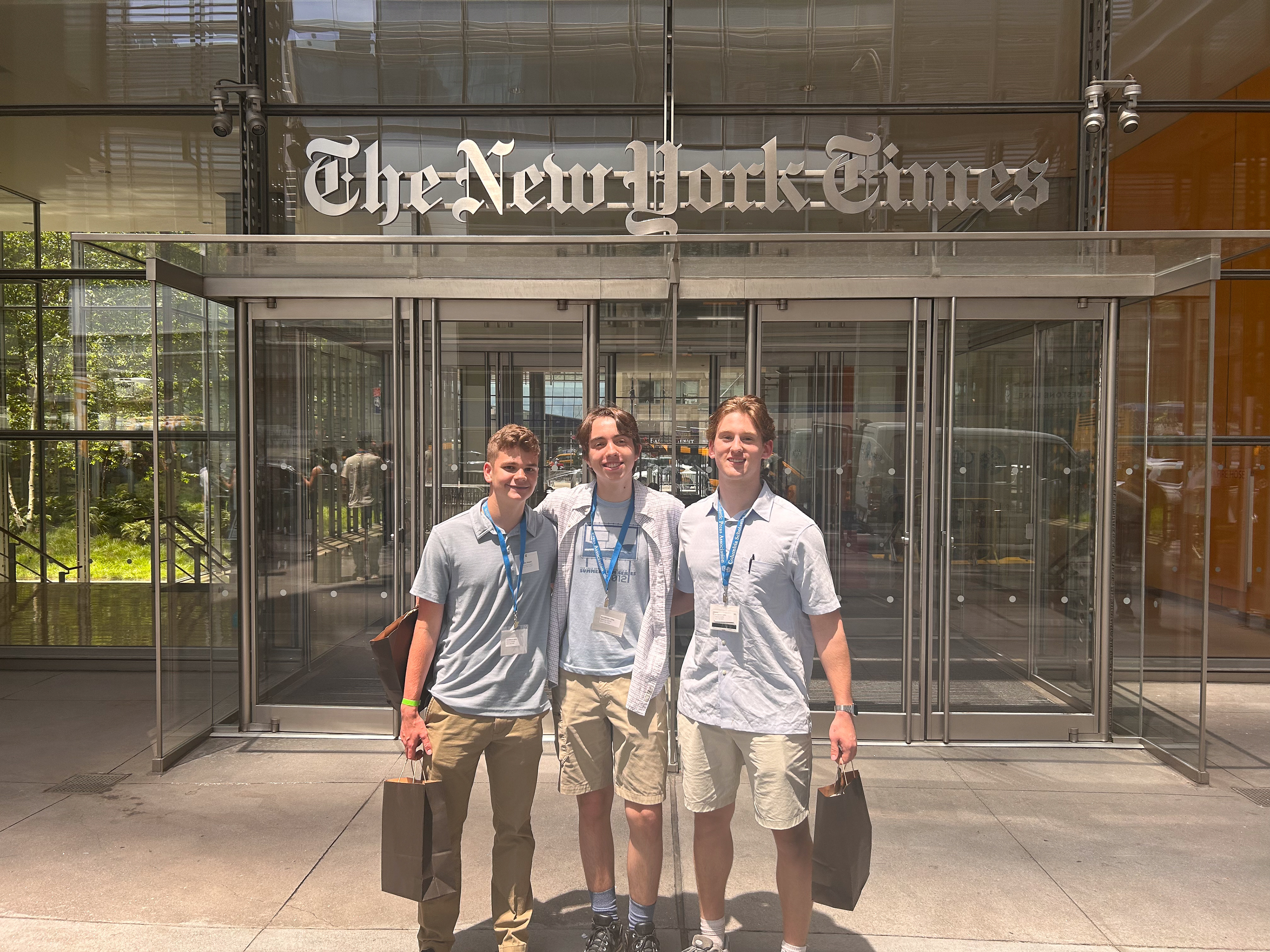
Myself and two other workshop attendees – and close friends – pose for a photo outside the New York Times headquarters at the Columbia Scholastic Press Association Summer Journalism Workshop.
“What’s a deck?” I asked a young lady sitting next to me in a design class taught by the adviser of the U-High Midway, Mr. Logan Aimone, MJE.  
If I recall correctly, her side eye was punctuated by a slight giggle. 
That interaction adequately summed up my experience at Columbia – questions. Plenty of them. 
There, my print-only student newspaper was chump change compared to the powerhouses present: El Estoque, the Midway, the Southerner, to name a few. For that week, I was simply a sponge, taking in information, such as learning what AP Style was (I had never heard of it) and how to write a lede. It was one of the most fun and insightful – while equally terrifying – weeks of my life. But as a result, I saw the vast opportunities that lie within student journalism. I returned to Memphis with a newfound desire to transform my student newspaper. 
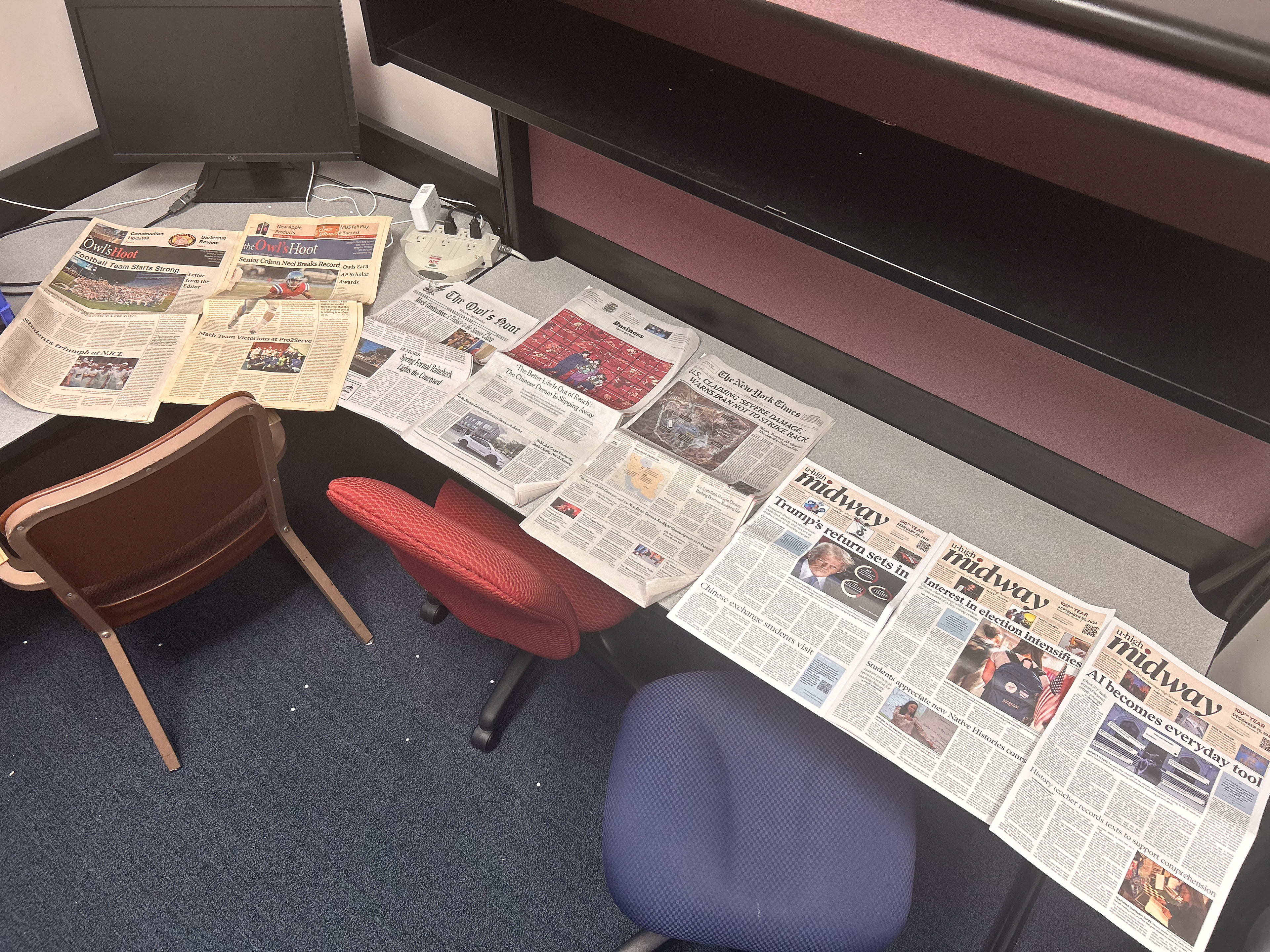
A collection of papers from Columbia and my school's archives on a table in our previous newsroom. We promptly had to move to a much smaller space, but continued our mission of developing a new paper.
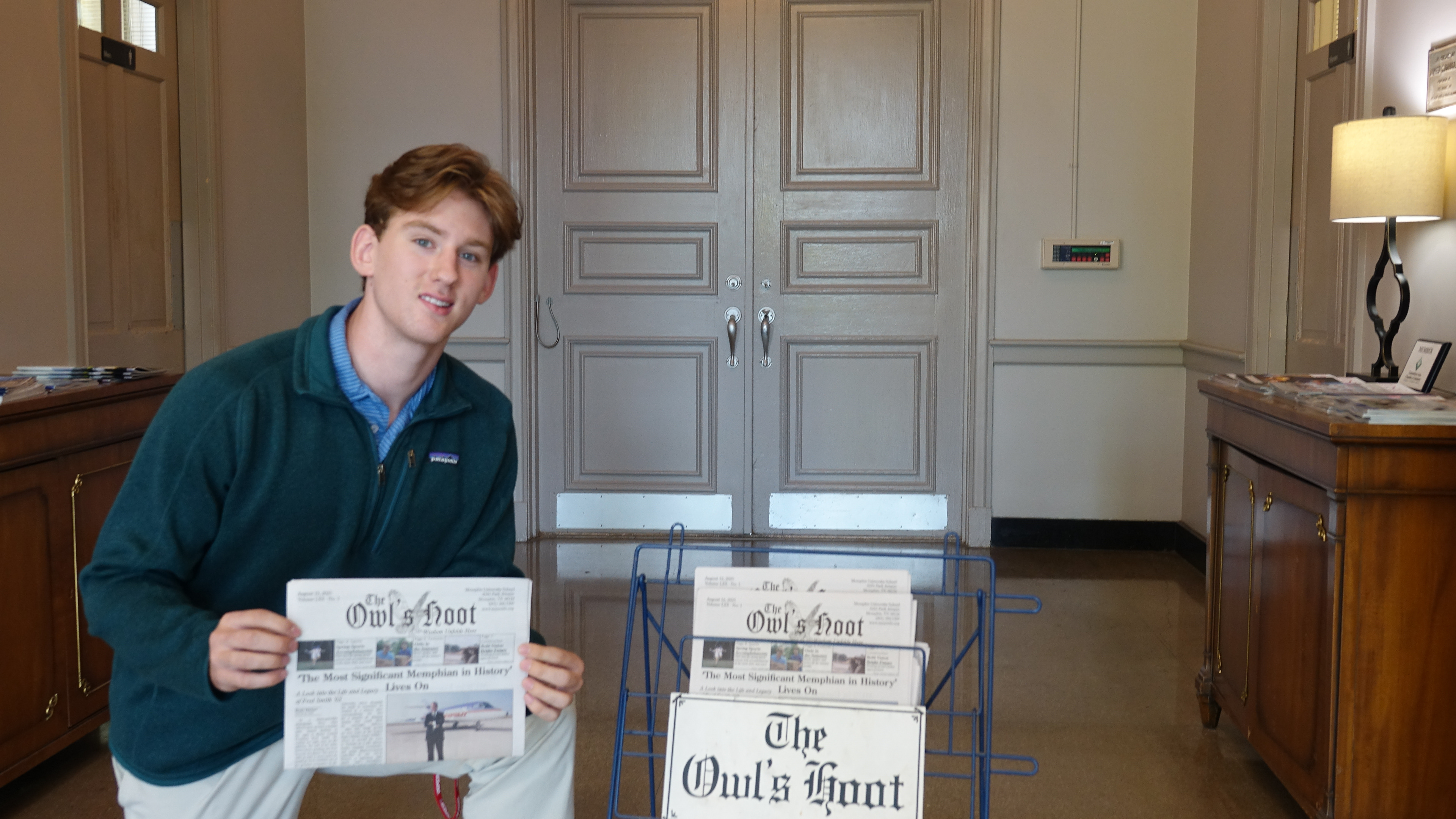
A photo of me posing with our back to school edition, taken for social media purposes by the MUS communications team. This design was quickly antiquated as we continued growing our paper! (Photo Courtesy of MUS Communications)
I learned quickly that this process would take far more than just invigoration, and my summer months turned into frequent 10-hour workdays. I completely overhauled the paper’s design and editorial processes, and worked alongside the administration to appoint a new faculty adviser – Mrs. Ginny McCarley, in her second year of teaching at MUS. I created the first staff manual I had ever been exposed to – the old one had been typed on a typewriter and was rusted shut with an ancient paperclip. I also adopted AP style, as encouraged by my Columbia instructors, and began teaching it to my staff in a summer journalism day. I concluded my summer with a back-to-school edition, which was the first one we have printed in memory, and soon after, I established our school’s first ever website via Student Newspapers Online (SNO). I thought it would take years. 
We did it in three months, and this year, our paper was designated as the No. 1 paper in the state. 

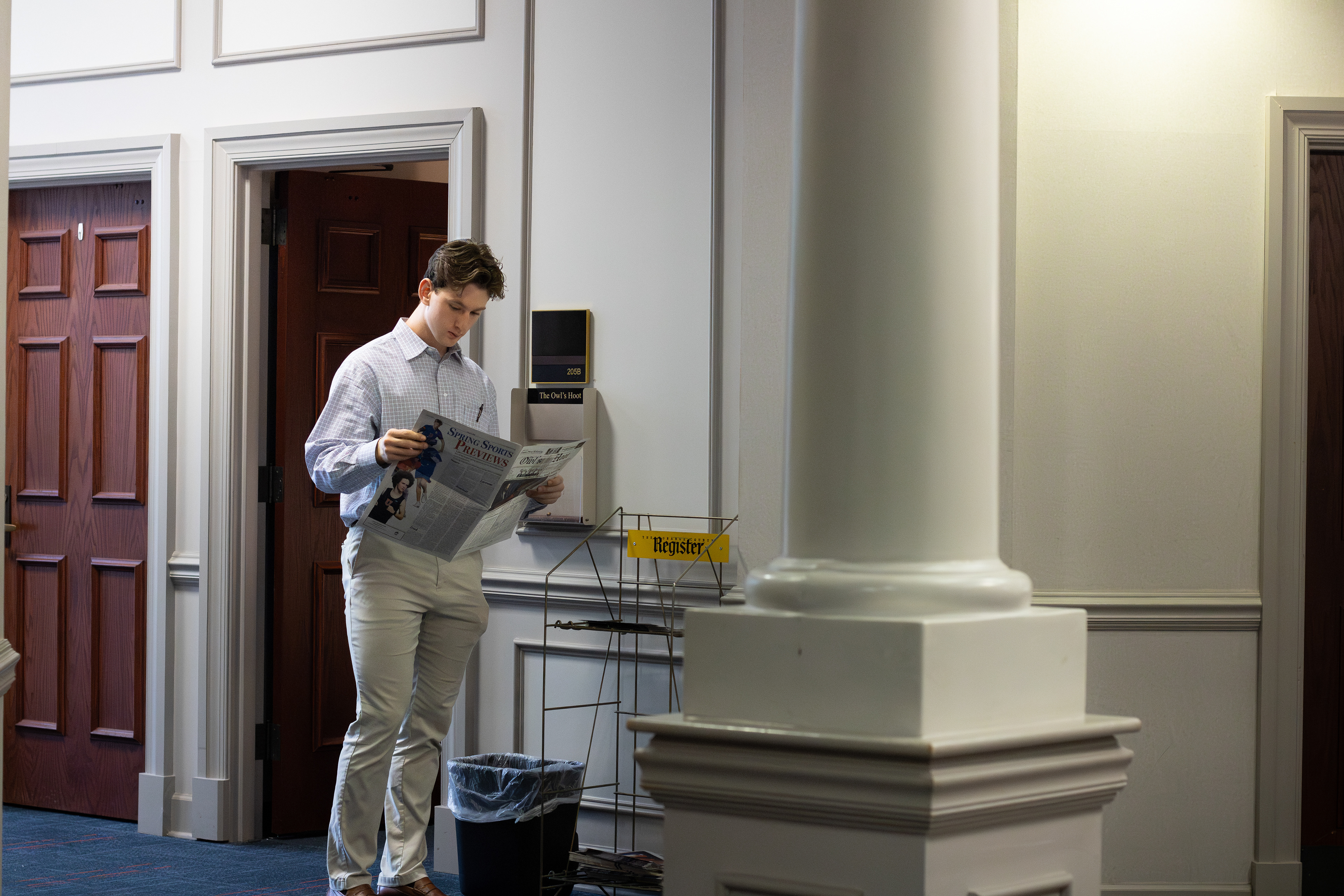
Me reading our March edition during Spring Break, 2026, almost a year after my original appointment as editor-in-chief.
Memphis is a city that turns nothing into something. Whether it be Fred Smith inventing air shipping or Danny Thomas creating a hospital to cure childhood cancer, I have learned through reporting within this city and leading a group of vigorous writers that true success in institutional storytelling and journalism does not depend on where you start; it depends on what you create
I smile knowing that I have created a program whose ripples have been felt statewide. My photojournalistic experience, born, like my love of reading, out of necessity for capturing photographs around campus and Memphis, has captured emotions from protests within a city that is burdened by political hardship. My stories of retiring faculty members have brought tears to the eyes of alumni across the nation, as I have been graciously told over a handshake and compliment. My community outreach to alums and our local news organization, The Daily Memphian, has encouraged young writers to pursue a career in journalism as I intend to. 

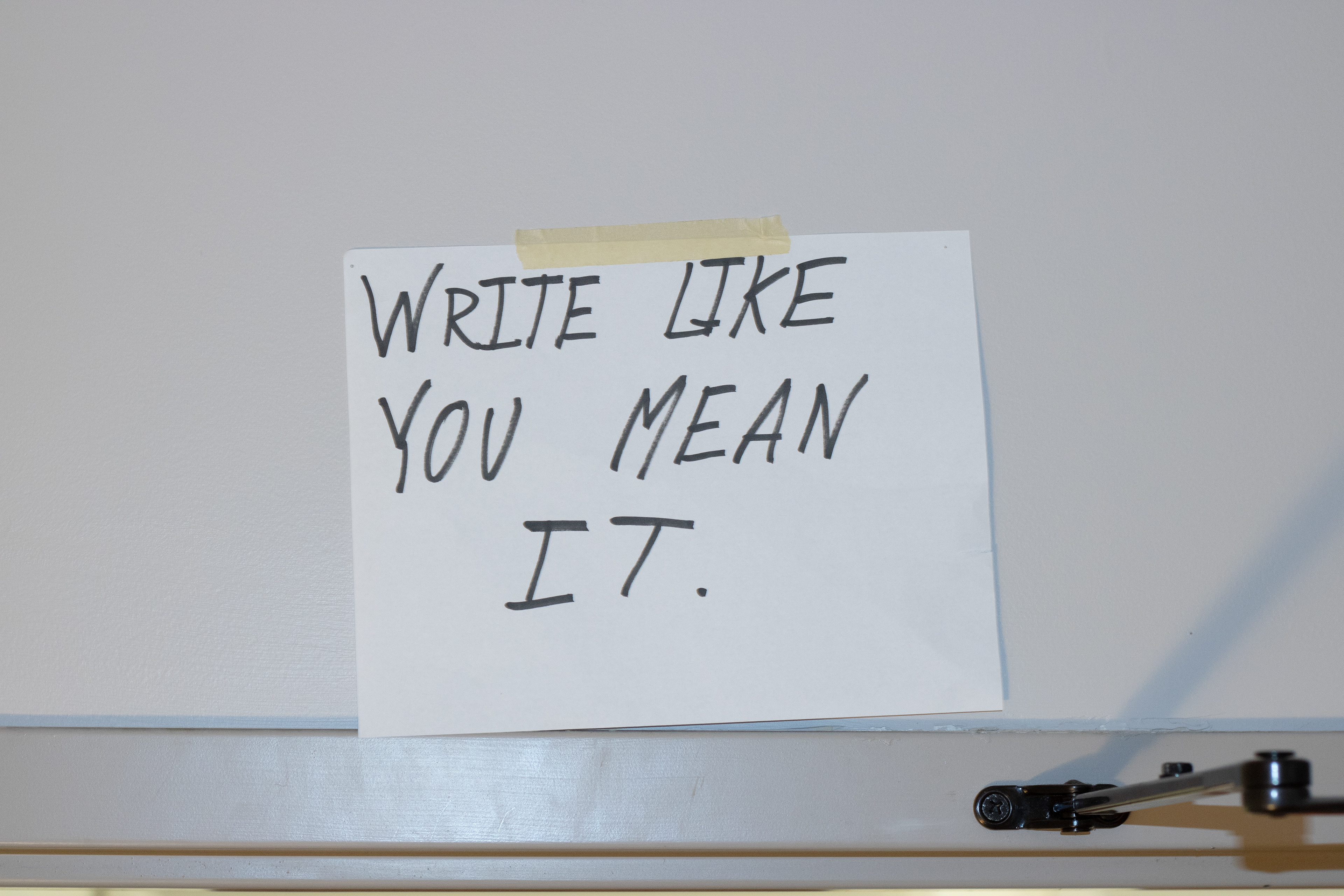
An additional angle of the "WRITE LIKE YOU MEAN IT." sign, taken as one might see it when exiting the newsroom. I look up there every day.
This story brings me now to the sign that sits at the top of this section, and the subtitle of my portfolio: “WRITE LIKE YOU MEAN IT.” Scrawled upon a sheet of copy paper in Expo marker, I created this sign last spring in a fit of excitement. Now, this sign hangs above my newsroom door as a constant reminder of pursuing excellence every single day.  
I look back at that budding Memphis writer, plunged into the world of journalism off 116th and Broadway. Unbeknownst to him, the next months would turn into a melting pot of his lifelong love of writing and career aspirations to tell stories of incredible people, leading him to a welcoming community of inspiring writers and a look towards college journalism, wherever he may end up. That young man meant it, every step of the way. 
I hope he knows how proud of him I am. 

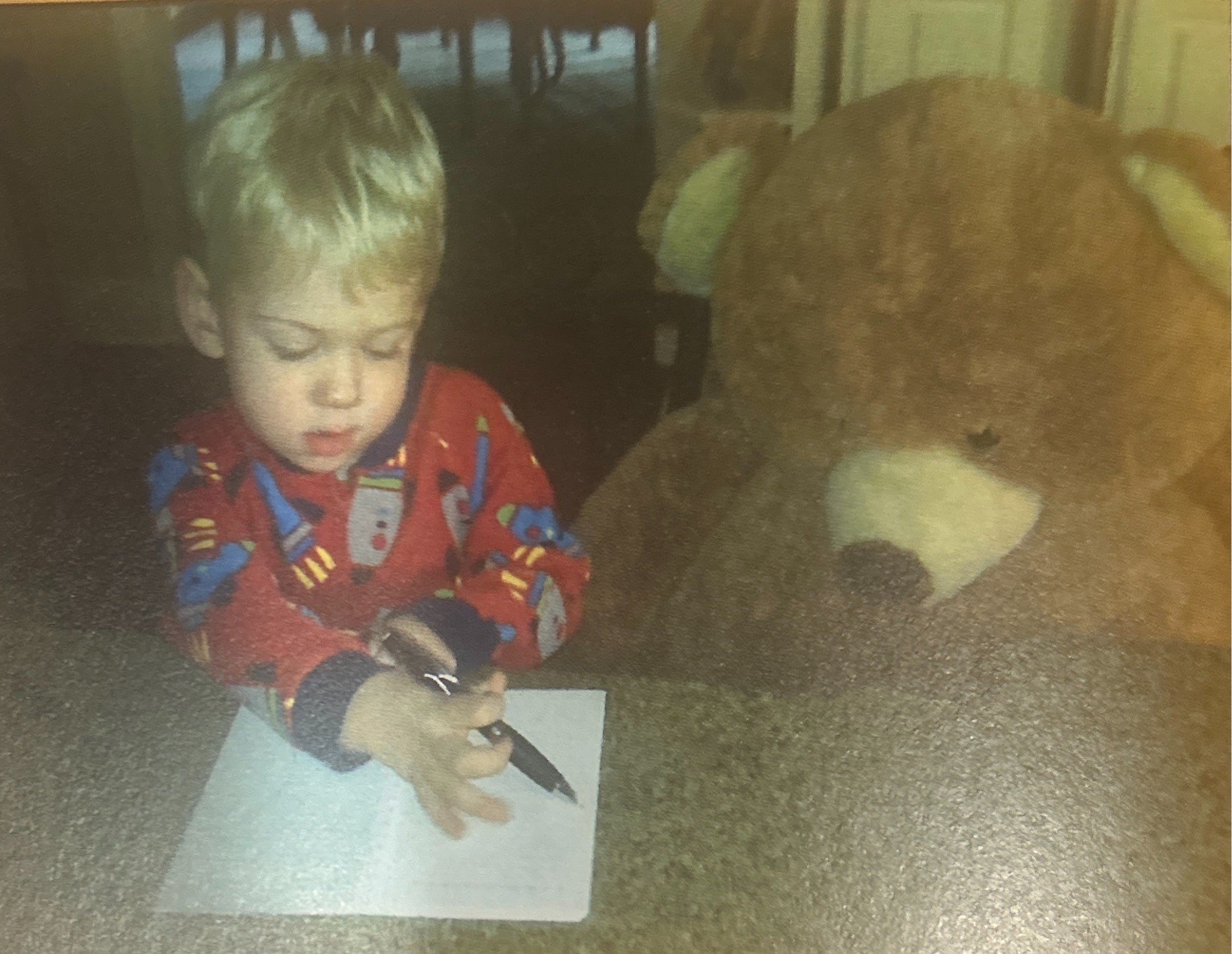
A much younger editor-in-chief teaches an ursine reporter how to write like you mean it.

Back to Top